What Can a Picture Book Teach Us About Philanthropy?
Written by Meredyth Pederson Cooper, Executive Liaison and Community Event Manager
In my household, books are my go-to tool for engaging with big ideas. As a parent to a highly curious four-year-old, when I run out of ways to explain something, I head to the library. From navigating grief and loss to understanding the difference between wants and needs, picture books help my family connect and find common language to talk about the big things in life.
Though they are written for children, I believe picture books are for all ages. There’s usually an adult involved in the reading of them in the early years. And all of us adults were once kids. Today I’m excited to introduce you to a picture book that contains several simple, but meaningful, lessons about philanthropy for all ages to think about. Let’s read The Helping Sweater by Rachel Más Davidson:
To experience the whole book, you can click here to watch a 2-minute read aloud video and then come back to read the rest of this post. If you’re not currently in a place conducive to watching a video, let’s start with an overview of the story.
In The Helping Sweater, Maya wakes up excited to wear her favorite sweater to school on one of the first crisp days of the season. At the breakfast table, Maya’s cat pulls a loose thread on her sweater and it starts to unravel. But Maya does not let this ruin her day. She snips the loose yarn off her sweater and dangles it playfully in front of her cat, who is delighted. As Maya makes her way to school, she notices more opportunities to solve problems for others with her sweater yarn. This continues as she goes through her school day. In the illustrations we see Maya’s sweater get shorter and shorter until she is shivering cold on the bus ride home. The person sitting next to Maya pulls out a sweater from a box of clothes marked “donate” and gives it to Maya. As Maya exits the bus, the new sweater’s thread catches on the seat and begins to unravel. But this time, Maya sees the loose thread as an opportunity, and she “couldn’t wait to help again.”
Everyone has something to share
One of this book’s clearest messages to young readers is that no one is too small to help. Maya might be “just” a kid, and she doesn’t have money, but after seeing her cat play with her unraveling sweater, Maya quickly realizes its capacity for helping others. Throughout her day she uses her resources (currency: sweater yarn) to help all kinds of friends and strangers. Maya’s unique and abundant resource enables her to help people younger and older than her.
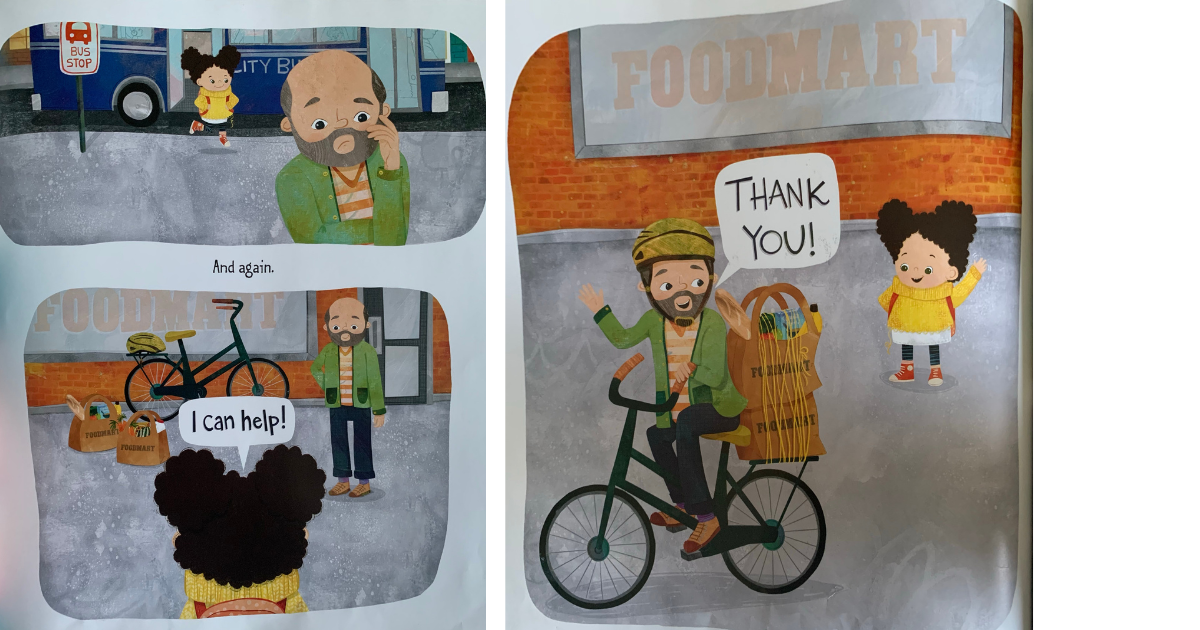 We can learn a lot from Maya’s consistent generosity. Before working in the philanthropy sector, I never considered myself a philanthropist – that word meant something bigger, and I didn’t feel like I had enough resources to be able to make an impact. Since joining Triangle Community Foundation's team almost four years ago, I’ve learned that meaningful giving comes in many sizes and shapes, and being a philanthropist means more than one thing. Over the last few years, I’ve given more of my time through volunteering and increased my own financial giving through manageable, recurring monthly gifts that over time add up. In The Helping Sweater, Maya recognizes she has something unique to offer to others. I love how this story challenges all of us (especially adults!) to really ask ourselves: what do I have to give? What can I share with my community?
Understanding and recognizing the need(s)
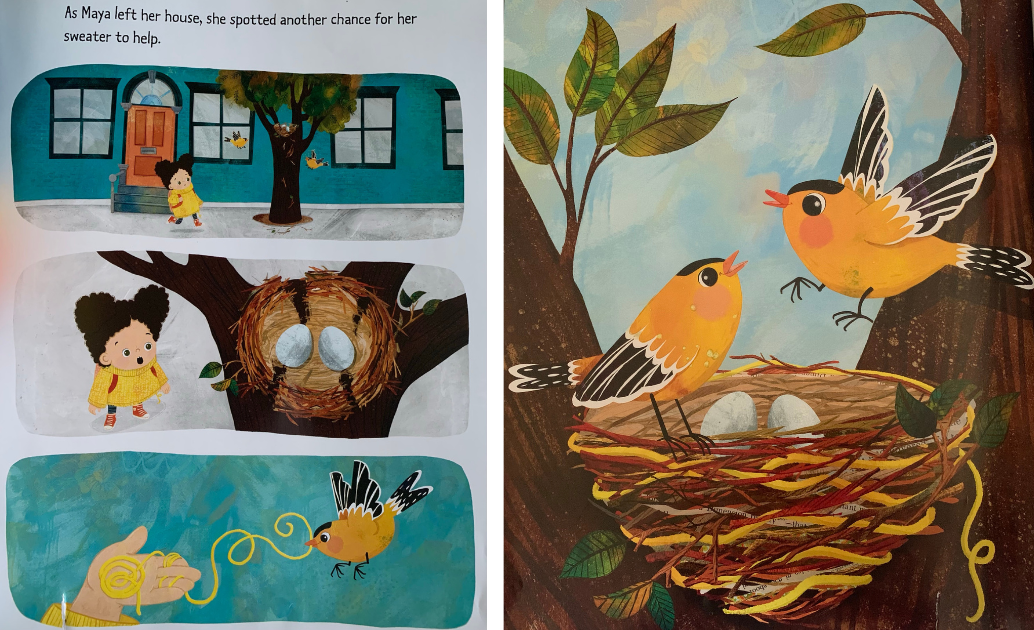 Another way that Maya embodies philanthropy is through her sharp observations of her community’s needs. No one ever asks Maya if they could use part of her sweater to solve their problem. Instead, throughout her day, Maya sees someone in need and recognizes how a piece of her sweater yarn could bring that person some ease.
This is the value of a community foundation: We connect, convene, and educate our fundholders about community needs and the organizations responding to them. We can do this because of our strong relationships with Triangle nonprofit partners. The needs in our community are a lot more complex than the problems that Maya solves in her day, but the skills of observing and understanding those needs are still essential to responding to them. Here at the Foundation, we’ve learned a lot over the last two years engaging with the issue of housing affordability in our region. The complexities of this issue are so layered, that it will take all kinds of skills, expertise, and collective attention to make sure everyone can afford a safe place to live.
Give what you can, when you can
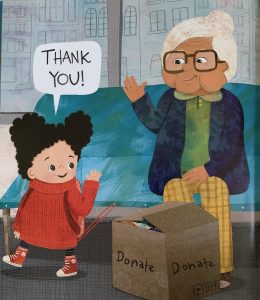 The last philanthropic message from The Helping Sweater I want to share with you is to be like Maya: give what you can, when you can. Maya freely gives away her sweater yarn at every opportunity, without the burden of a yarn budget (because she’s a kid!) She ends up using all the yarn to help others and takes a cold, sweater-less bus ride home at the end of the day. And then something wonderful happens: we get to see the helper receive help. When the person next to Maya on the bus sees Maya is cold, they offer her a sweater from a box of clothing donations.
I love this moment because it reminds me that we are all connected. Just as we can all be helpers, we will all also need help from others. It is easy for all of us to fall into a scarcity mindset and let that get in the way of our giving. While I’m not telling you to throw your household budget out the window, I do think we can all stand to trust more in the abundance of the collective. Keep giving generously and trust that in the future you will have or receive what you need when you need it.
I invite you to use Maya’s story and its themes to spark conversations in your own circles – with your family tonight at the dinner table, or even as self-reflection. What gaps do you notice in your community? What organizations are responding to these needs? What do you have to give? It may be a small financial donation to a nonprofit, or a Saturday morning spent volunteering at the food bank. Or maybe the resource you have to share is as unique as the yarn of your favorite sweater.
What needs do you notice in your community as you go through your day? Find out which nonprofits are addressing these needs and get to know their work so you can support it. If you’re a donor-advised fundholder at the Foundation or interested in becoming one, our Philanthropic Engagement Team would love to learn more about the community needs that matter the most to you and help you find organizations responding to them. Reach out to [email protected] to learn more.