
The “Missing Middle” in Triangle Housing
How can a historical view of housing density provide a path to a stronger future in affordable housing?
The “Missing Middle” is a trending term among city leaders who are struggling to address housing affordability. This trend points to a housing model that has historically provided affordable options in communities that need them but has largely been eradicated due to zoning laws over the last 70 years.
This “middle” model refers to small-scale, multi-unit homes that sit between single-family houses and large-scale apartment buildings.
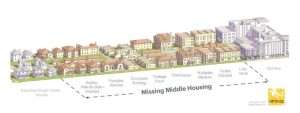
Photo: missingmiddlehousing.com
Middle housing often references:
- Duplexes and triplexes
- Quadplexes
- Townhomes
- Courtyard apartments
- Cottage clusters
But it can also expand to include:
- 6-10 unit apartment buildings
- Neighborhood-scale 10-20 unit developments
Middle housing is an essential part of the quest to address affordability because land is one of the biggest drivers of housing cost. When two, four, or six homes share the same lot, the land cost is divided, which makes each home more attainable.
Changes in Zoning – The Evolution of the “Middle” & the Pendulum of Housing
If you have walked among urban streets, chances are you have seen this type of real estate sprinkled among larger complexes and single-family homes. These were once common in older neighborhoods prior to World War II. But in the post-war era with a push toward urban sprawl and more car-dependent neighborhoods, middle housing had largely become illegal because of the zoning changes. Until recently, most Triangle neighborhoods only allowed one home per lot, which put pressure on the supply in a period of continued growth. And that pressure has perpetually impacted critical community workers like teachers, nurses and those in the service industry – pricing them out of the neighborhoods where they work.
Raleigh, Durham and Chapel Hill have recently reformed these policies to increase housing density, but now area developers face the challenge of scaling production at a pace and cost that makes sense.
Now, as cities look for a more sustainable model, the pendulum is swinging toward increasing affordable middle housing and reducing carbon emissions with communities that can lean on public transportation.
But developers are facing challenges and community push-back:
- Middle projects are smaller and harder to finance than large apartment buildings.
- Neighborhoods can resist these changes and slow progress, which requires more education on the benefit and realities of these homes.
- Design standards need to be tailored to fit neighborhood context.
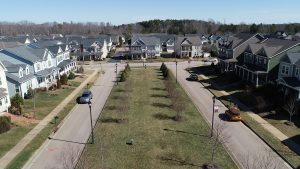
Photo: raleighnc.gov
What Matters - Now
Growth in the Triangle is not slowing down. Expanding housing choices is just one of the many ways to improve affordability for the people who make our communities work.
But this is only the start of the conversation. At What Matters on June 3 we are convening leaders across public and private sectors to address housing affordability in the Triangle. Follow our social channels to stay up to date on the latest from the event and the latest ideas that come forward when a community comes together to create lasting change.